loader
  • WHERE TO GO
    WHERE TO GO
    • Regions
      Discover the mountain Regions
      Thousand-year-old cultures, different linguistic strains, biodiversity and multifaceted territorial morphologies. Discover the peculiarities of the valleys, municipalities and areas of the mountains of Friuli Venezia Giulia
      Discover the mountain Regions
      Thousand-year-old cultures, different linguistic strains, biodiversity and multifaceted territorial morphologies. Discover the peculiarities of the valleys, municipalities and areas of the mountains of Friuli Venezia Giulia
      All the mountain regions
    • Ski resort
      Discover the Ski areas in Friuli Venezia Giulia
      Summer or Winter, it doesn’t matter: skiers, pedestrians, hikers, bicycle lovers or who simply loves to enjoy a panoramic view, but without getting tired, will find open Ski lifts all over the year in the ski areas of FVG
      Discover the Ski areas in Friuli Venezia Giulia
      Summer or Winter, it doesn’t matter: skiers, pedestrians, hikers, bicycle lovers or who simply loves to enjoy a panoramic view, but without getting tired, will find open Ski lifts all over the year in the ski areas of FVG
      All ski resorts

Olbe lakes from the Monte Ferro mountain hut

Long distance hiking trailrecommended routeLong distance hiking trail  · Carnia
LogoFriuli Venezia Giulia
Responsible for this content
Friuli Venezia Giulia Verified partner 
  • Arrivando ai Laghi d'Olbe
    Arrivando ai Laghi d'Olbe
    Photo: © Piller Hoffer Manuel, © Piller Hoffer Manuel

Selected alternatives for you
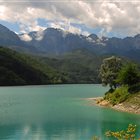
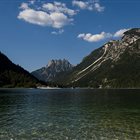
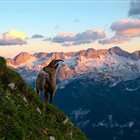
    The lakes are located on the vast Olbe plateau, made up of small hills, wide basins, and grassy terraces, under the serrated ridge that extends from Mount Righile towards Mount Ferro. Their waters fill the bottom of ancient basins dating back to the last glaciation. Of the three, the westernmost is a kind of pond, the central one is small and not very visible, the most interesting is certainly the easternmost, fairly large and quite deep. In its very green waters the white towers of Righile are reflected.
    moderate
    Distance 3.3 km
    2:15 h
    635 m
    33 m
    2,164 m
    1,561 m

    It is a varied route, full of sun, a little steep in the first stretch, but very rewarding, perhaps the most evocative among those reaching the lakes. As you gain altitude, beautiful panoramas will open up before you: first towards the Clap and Siera groups, then towards the Terze, particularly the Terza Grande, which will appear as a singular, sharp pyramid. No particular difficulties are encountered, however, it is recommended to proceed cautiously when crossing some erosion channels where the path may be faint.

    Author: © Giovanni Borella

    C.A.I. Sappada/Plodn

    Interreg V Italy-Austria - CLLD Dolomiti Live. Project “Safe Mountain – Adventure Mountain” ITAT 4019 CUP B43J16000270004

    Profile picture of Giovanni Borella
    Author
    Giovanni Borella
    LogoFriuli Venezia Giulia
    Responsible for this content
    Friuli Venezia Giulia  Verified partner 
    Difficulty
    moderate
    Overall difficulty
    moderate

    Derived from the technical difficulty and the stamina requirements.

    Experience
    Landscape
    Highest point
    2,164 m
    Lowest point
    1,561 m
    Best time of year
    Jan
    Feb
    Mar
    Apr
    May
    Jun
    Jul
    Aug
    Sep
    Oct
    Nov
    Dec

    Track types

    Show elevation profile

    Safety information

    Difficulty: E

    Hours from Rifugio Ferro: ascent 2:00-2:30 descent 1:30-1:45 total 3:30-4:15

    Hours from Sappada: ascent 2:45-3:30 descent 2:00-2:25 total 4:45-5:55

    Trail Marking: 141

    DIFFICULTY SCALE

    The technical sheet of each itinerary includes the abbreviations commonly used in mountain guides (T- E - EE- EEA - A). Some itineraries may have a double abbreviation (e.g., T/E or E/EE) as they have the characteristics of both categories.

    T (tourist) indicates routes almost always short and easy that run on forest roads and/or well-marked or clearly visible paths that do not require particular training.

    E (hiking) indicates routes, sometimes quite long, that run on mule tracks and/or paths often above 2000 meters, clear but not always with trail marks. They have no significant difficulties, but sometimes can present some stretches or single passages that are a bit exposed or awkward. Appropriate equipment, some experience and training are required.

    EE (for experienced hikers) indicates routes generally at altitudes above 2000 meters, which may run on unstable terrain and/or in rough areas, often characterized by exposed and/or equipped passages or stretches, sometimes on small rocks with 1st-degree difficulties. They require experience, sure-footedness, orientation skills, good equipment, and physical and psychological preparation.

    EEA (for experienced hikers with equipment) indicates routes equipped with metal cables, brackets, ladders. Exposure is almost always constant. Experience, training, and proper equipment including helmet and via ferrata set are mandatory. Gloves are useful.

    A (for climbers) indicates rock routes leading to summits with low climbing difficulties (1st/2nd degree). They require technical skills, good experience, physical preparation, and suitable equipment (helmet, some slings, always useful also a 20-30 meter cord).

    Tips and suggestions

    WARNINGS

    • The information below cannot replace the presence of a professional mountain guide
    • The mountain is a wonderful environment but not free of risks, so it must always be approached with the utmost caution
    • In the warnings of the CAI/TCI Guides of the Mountains of Italy it is stated that the difficulty classification “remains essentially indicative and should be considered as such,” as it is a subjective element. This also applies to the itineraries proposed on the site
    • The difficulty classification and travel times refer to a hiker/climber of average level in terms of training, experience, skills, and conditioning
    • Before undertaking a certain route, carefully assess the difficulties, your skills, and level of training
    • Before starting an itinerary (that is not a short walk) it is good practice to: 1) consult the Dolomiti Meteo of Arpav by visiting the site http://www.arpa.veneto.it or calling 049 8239399 (Option 2). The bulletin, unlike national weather bulletins, offers a fairly reliable local forecast. 2) get information from the Tourist Office, local CAI section, mountain guides, refuge managers. Indeed, the trackability state and difficulty level of a route can undergo significant changes, even in a very short time, due to natural events (landslides, unfavorable weather) and/or contingencies (trail marker deterioration, fixed equipment conditions, presence of residual snowfields, etc.)
    • A mobile phone can give a false sense of security since there are areas without phone coverage
    • In case of accident, illness, or inability to continue, contact only and exclusively the emergency number SUEM 118


    Public transport

    Get Timetable to destination

    to
    26 OLBE LAKES from Rifugio Monte Ferro - Sappada

    Coordinates

    DD
    46.576362, 12.681417
    DMS
    46°34'34.9"N 12°40'53.1"E
    UTM
    33T 322342 5160700
    w3w 
    ///dummy.accumulates.doubts
    Get there by train, car, bike, or on foot!

    Book recommendation by the author

    © Excerpt from the guide "Sappada, from trails to summits" by Giovanni Borella, published by CO.EL. publishing house.

    Giovanni Borella Born in Belluno, he lived there until his adolescence. He later moved to Padua, where he still lives, attending the local University and earning a degree in Ancient Literature which led him to teach for several decades. Hiker first, climber later, he has made numerous ascents both in the most famous Dolomite groups and especially on the mountains of Sappada, which he has frequented for many years in summer and winter, where he has also opened new routes and repeated others solo. He has published three guides: "On the sunlit trails" Mediterranee editions 1995 as co-author, "Sappada, from trails to summits" Co.El. publishing 2002, "Dolomites of Comelico" Lint editorial 2010.

    Author’s map recommendations

    Carta Topografica Tabacco - Sheet 01 - Scale 1:25000

    Localization

    Parts of this content were machine translated using Italian as the source language

    Similar routes nearby

    • 25 OLBE LAKES via the ski slope and path 135 - Sappada
    • 21 REFUGE 2000 from Piani di Gront - Sappada
    • 24 MONTE DELLA PIANA NATURE TRAIL - Sappada
    • 23 MONTE DELLA PIANA via the west ridge - Sappada
    • 12 DAMIANA BIVOUAC for Col Lanar - Sappada
     These suggestions were generated by our system
    Difficulty
    moderate
    Overall difficulty
    moderate

    Derived from the technical difficulty and the stamina requirements.

    Distance
    3.3 km
    Duration
    2:15 h
    Ascent
    635 m
    Descent
    33 m
    Highest point
    2,164 m
    Lowest point
    1,561 m
    Linear route

    Statistics

    • Content
    • Show images Hide images
    Features
    2D 3D
    Maps and trails
    Nothing selected - click and drag in the elevation profile to zoom
    Distance
    Duration
    Ascent
    Descent
    Elevation profile